
What buying off-plan in Cyprus actually means
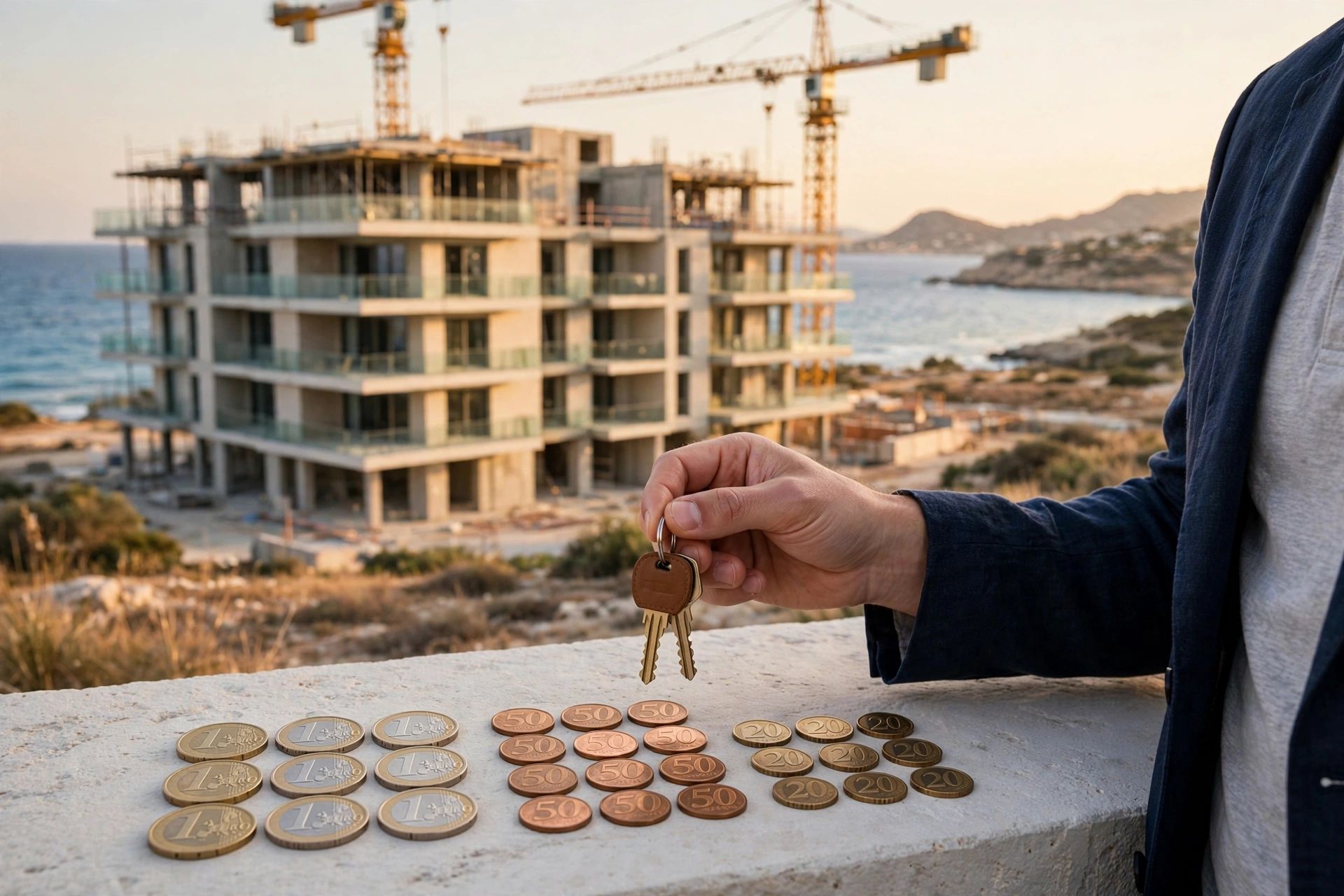
Buying off-plan means committing to a home before construction is complete, sometimes before building work has begun. You are agreeing to purchase a future property, so plans, specifications and the contract matter as much as the location. For a sound investment decision, treat projected growth as uncertain rather than guaranteed. The purchase process should leave you clear about what you are buying and when it is due.
How a property purchase moves from reservation to completion
A reservation may take a property off the market for a limited period while you arrange legal and financial checks. You then review and sign the sale contract, pay according to its terms, and follow construction progress until handover. The precise sequence and deadlines depend on the contract and project, so get independent advice before paying a substantial amount.
How staged payments differ from paying for a completed home
With an off-plan purchase, payments may be linked to stages or dates set out in the contract; a completed home is usually bought closer to the point of handover. Staging can spread cash needs, but it does not remove the need to have funds available when each payment falls due. Check the schedule against your own income, financing and contingency reserves.
What the sale contract should say about specifications and handover
The contract should identify the property and clearly describe its materials, fixtures, plans and agreed completion arrangements. Confirm how changes are handled, what counts as completion, and how outstanding defects are recorded. If a detail matters to your future use or letting plans, have it written into the documents rather than relying on a sales conversation.
Why off-plan can appeal to investors
Buying before completion can offer a chance to enter a project at an earlier stage, though there is no promise that its value will rise. The attraction is often a combination of timing, payment structure and the prospect of a newly built home. Each benefit needs to be weighed against construction, market and financing risks. Think in terms of a possible return, not free money.
How buying early may create scope for capital appreciation
If demand and comparable values strengthen before handover, an early buyer may benefit from appreciation. The reverse is also possible: prices can stagnate or fall, and a new project may face competition from other homes. Compare current asking prices with completed sales where reliable information is available, and avoid basing your decision on a forecast alone.
When staged payments can help manage cash flow
Staged payments may help you plan when capital is needed, especially if you are not paying the full price at once. They do not necessarily reduce the total cost, and a delay can change when you need to arrange funds. Map each due date against expected income, loan drawdowns and other commitments before you sign.
Why new-build features may attract tenants or future buyers
A modern layout or specification may suit some tenants and future purchasers, but preferences vary by area and price point. Focus on features you can verify in the contract, then test whether local demand supports them. A polished finish is not a substitute for location, rental affordability or a well-managed building.
How to evaluate a Cyprus real estate investment
Start with the people who may rent or buy the home after you, rather than with the brochure. Location, achievable rent, recurring expenses and resale demand work together to shape the investment case. For a broad view of locations and property types, review Cyprus investment locations, then test any appealing option against current local evidence. The same discipline applies whether you plan to let, use or resell the property.
Compare locations by tenant demand and resale prospects
Check access to services, transport and the amenities that matter to your likely tenants. Ask local agents about competing homes and how long comparable properties take to let or sell. A popular destination is not automatically the right fit for every property, so compare the specific neighbourhood and building.
Estimate rental income using realistic occupancy and costs
Build an estimate from achievable rent and realistic periods without a tenant, then subtract management, maintenance and other recurring costs. A compact comparison helps you see which assumptions drive the result:
Estimate | What to check |
|---|---|
Gross rent | Comparable long- or short-term rents |
Occupancy | Seasonal variation and vacant periods |
Operating costs | Management, repairs and shared charges |
Net income | Rent after recurring costs and deductions |
Use conservative assumptions, not a best-case occupancy rate. If the numbers only work when the home is occupied almost continuously or costs stay unusually low, the return may not suit your risk tolerance.
Assess the developer’s track record and project quality
Look for completed projects, clear specifications and a record of communicating about progress and handover. BERKOS, a Limassol-based property development and construction company active since 2016, coordinates planning, engineering, construction management and handover. Ask for evidence that the team and project arrangements match the promises in the contract; a company description alone is not due diligence.
Costs, taxes, and financing that shape returns
The purchase price is only one part of your budget. Legal fees, transaction costs, ongoing maintenance and any financing charges can alter the return materially. Tax treatment depends on your circumstances and the property, so confirm details with qualified local advisers before relying on a net-income estimate.

Budget for purchase costs, legal fees, and ongoing expenses
Ask your independent lawyer to identify the costs payable at each stage and which expenses may recur after handover. Include repairs, building charges and property management in your forecast. BERKOS also provides after-sales support and long-term property management; clarify the scope and terms of any service you may use.
Check how VAT treatment may affect the total price
Confirm whether VAT applies, what rate or treatment is relevant, and whether the advertised price includes it. Eligibility and applicable rules can depend on the facts of your purchase and may change. Do not assume a rate or relief applies simply because it was available to another buyer.
Model loan costs, payment timing, and currency exposure
If you borrow, compare the full repayment cost and check when funds must be available against the construction payment schedule. If your income or savings are in another currency, exchange-rate movements could change your effective cost. Test more than one financing and currency scenario before deciding how much you can safely commit.
Verify tax and residency rules with qualified local advisers
Tax residence, rental income and purchase rules are separate questions, and eligibility depends on individual circumstances. A general guide to foreign buyer rules can help frame questions, but it cannot replace advice on your situation. Confirm the current requirements directly with qualified advisers before including a tax or residency benefit in your return calculation.
Legal and construction checks before signing
An off-plan contract asks you to commit before you can inspect a finished home, which makes document checks especially important. Use your own Cyprus-qualified lawyer and keep a record of plans, correspondence and agreed changes. If you are buying remotely, establish who will report progress and how you will receive formal updates.
Confirm the property’s jurisdiction, title, and planning permissions
Ask your lawyer to verify the property’s jurisdiction, title position and relevant planning and building permissions. Confirm that the unit and any shared facilities are described consistently in the contract and approved plans. Resolve uncertainties before paying or signing, rather than treating them as paperwork to finish later.
Review the contract, payment protections, and remedies for delays
Read the payment schedule alongside provisions for delays, changes, cancellation and dispute resolution. Ask what protections apply to each payment and what remedies are available if the project does not meet contractual obligations. BERKOS coordinates project planning through handover, but your own lawyer should assess the specific contract and protections.
Check the completion specifications, warranties, and defect process
Confirm the handover standard, included fittings, warranty terms and process for reporting defects. Ask how you will inspect the property and how outstanding work is documented and addressed. Put agreed dates and responsibilities in writing so expectations remain clear when the build is complete.
Risks and ways to plan your exit
The investment can be affected by construction delays, weaker rents, higher costs or a slow resale market. None of these risks necessarily makes off-plan unsuitable, but each should be visible in your planning before you commit. Your exit plan should account for the possibility that you need to hold the property longer than expected.
Stress-test returns against delays and lower-than-expected rents
Calculate how your finances look if handover is late, occupancy is lower or repairs cost more than planned. Keep enough liquidity to meet contract payments and ownership expenses without relying on immediate rental income. A forecast that survives less favourable assumptions is more useful than an attractive best-case figure.
Consider market liquidity before relying on a quick resale
A resale depends on buyers, comparable supply and the terms of your contract and local law. Do not assume you can assign or sell your interest freely before completion; ask your lawyer about restrictions and costs. Treat a quick exit as a possibility, not the foundation of your investment case.
Set a contingency budget and define when you would sell or hold
Decide in advance what financial pressures would prompt a sale and what conditions would make holding sensible. Set aside a contingency for delays, repairs and vacant periods, and revisit your assumptions as the project progresses. That way, a changing market is less likely to force a rushed decision.